Winter can leave behind more than a few fallen sticks. As temperatures warm up in Hunterdon County, trees start pushing new growth—yet the damage from cold snaps, wind, snow load, and saturated soil often shows up now. A quick spring tree checkup helps you prevent surprise failures and expensive removals later in the season.
6 signs your trees need attention this spring
- New cracks in the trunk or major limbs
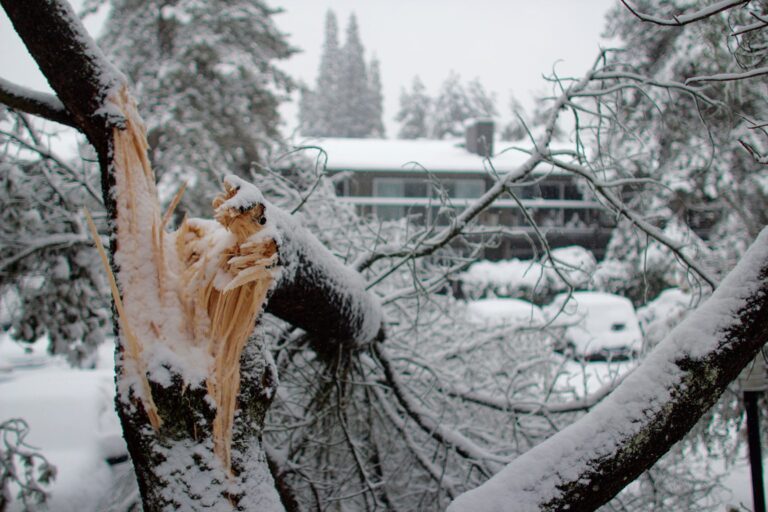
Freeze/thaw cycles can expand small splits into structural cracks. If you see a fresh seam, peeling bark around it, or a “sharp” looking opening, get it evaluated. - Hanging or broken limbs (“widowmakers”)
Limbs that partially snapped over winter can stay lodged in the canopy. One windy day can bring them down—often over driveways, decks, or play areas. - Leaning trees or raised soil at the base
Spring soil is soft. If you notice a new lean, heaving, or lifted roots, that’s a stability red flag—especially near homes, fences, or power lines. - Dead branch tips and sparse budding
Some dieback is normal, but if a tree is late to leaf out compared to nearby trees of the same type—or has multiple dead tips—there may be stress, pest activity, or root issues. - Mushrooms near the trunk or in the root zone
Fungal growth can indicate decaying wood underground or at the base. It doesn’t always mean removal—but it should be checked. - Bark damage from deer, rodents, or equipment
Wounds can invite disease and insects. Spring is the right time to clean up and plan mitigation.
What you can do right now
- Walk your property after a windy day and look up into the canopy.
- Mark problem areas (tape, photos, notes).
- Prioritize safety: anything over a structure, driveway, or high-traffic area moves to the top of the list.
Why spring is the sweet spot
Before full leaf-out, arborists can see structure clearly—making it easier to identify weak unions, crossing branches, and storm damage. Early work also helps trees allocate energy to healthy growth instead of supporting compromised wood.
If you want peace of mind heading into spring storms, schedule a spring inspection. We’ll identify hazards, recommend trimming or removals if needed, and help you plan smart tree care for the season.