Winter is a revealing season for trees. Without leaves, structure is easy to see, and problems that hide behind summer foliage become obvious: dead limbs, weak unions, crossing branches, and storm damage that never fully resolved. For homeowners in Northwest New Jersey, winter is also the season when tree issues stop being cosmetic and start becoming urgent—because wind, snow load, and ice magnify weaknesses fast.
The first step is to understand the difference between “good winter pruning” and “risky winter neglect.” Pruning in winter can be an excellent choice for many trees because it allows for clean visibility, reduces the spread of some pests and diseases, and sets the tree up for a strong spring response. But winter is also when trees are stressed by cold and weather events. The key is having pruning performed correctly, for the right reasons, and with clear priorities around safety.
Start with targets. Any limb over a roof, driveway, patio, fence, or power line deserves a closer look. You are not judging the tree as a whole—you are judging risk based on what a failure would hit. A healthy limb that’s poorly positioned can still be a hazard. Conversely, a tree that looks “rough” may not be high-risk if it’s isolated from structures. Risk is always a combination of tree condition and target exposure.
The most common winter hazards are straightforward:
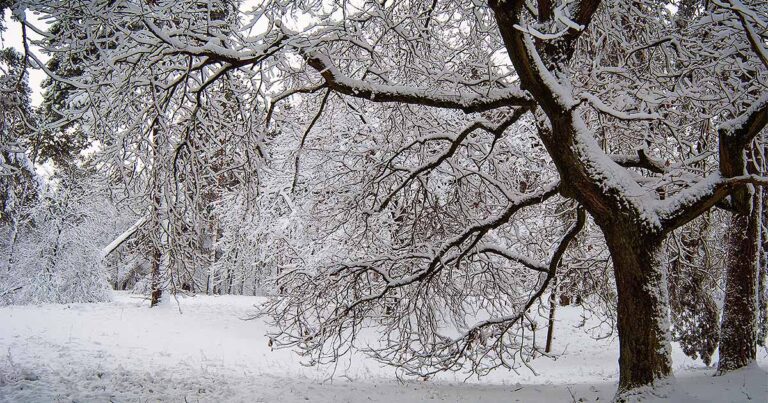
Deadwood is the obvious one. Dead limbs are brittle, and their attachment points deteriorate. Add wind or ice and they become unpredictable. Another frequent issue is overextended limbs—long branches with heavy end-weight. In winter conditions, those limbs can snap under load. A third category is weak unions, especially co-dominant stems where two leaders rise together and create a tight “V” junction. These unions can split, sometimes catastrophically, under storm stress.
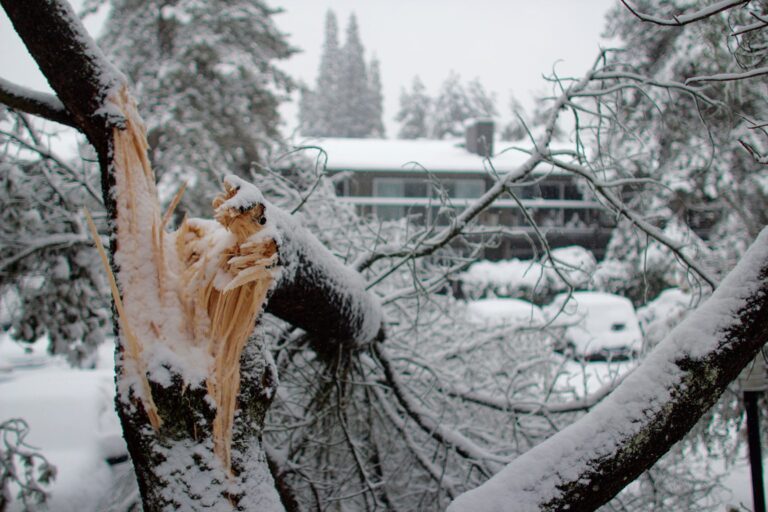
Winter is also when previously damaged trees show their true condition. A summer storm may have cracked a limb without breaking it. That crack can open further in winter, especially as wood expands and contracts and storms add additional strain. If you see fresh splits, hanging branches, bark tearing, or a sudden change in lean, you are looking at a tree that may be actively failing.
For property owners, the most effective winter plan usually includes three actions:
Remove dead and hazardous limbs first. This is the highest ROI work you can do because it directly reduces the chance of sudden failure. Next, reduce weight on overextended branches to decrease leverage during storms. Third, address structural issues: cabling and bracing can be appropriate in cases where a valuable tree has weak unions but is otherwise worth preserving. The point is not to over-prune; it’s to reduce risk while maintaining the tree’s integrity.
If a tree is beyond saving—or if risk is unacceptable—removal is the right call. Winter removals can be efficient because the canopy is lighter and visibility is better. Stump grinding after removal is also a practical winter task. It clears hazards, opens space, and prevents the stump from becoming a nuisance when spring projects start.
One important note: winter tree work is not a DIY situation for most homeowners. Cold conditions, ice, and unpredictable wood behavior make cutting more dangerous, not less. If the work involves height, chainsaws, rigging, or proximity to structures or utilities, it is a professional job. A safe crew will evaluate the tree, the drop zone, and the safest removal or pruning approach before any cuts are made.
Winter doesn’t have to be a season of waiting and hoping your trees hold up. It can be the season where you address the obvious hazards, reduce storm risk, and set your property up for a calmer, cleaner spring. The best time to handle a tree problem is when it’s a manageable project—not when it becomes an emergency call after the next storm.